This blog is based on the short story "Trunk of Ganesha" by Jayanta Mahapatra
Trunk of Ganesha is a thoughtful and subtly humorous short story that explores tradition, belief, craftsmanship, and the human tendency to search for supernatural explanations when ordinary logic is enough. Through a simple yet meaningful narrative about a clay idol whose trunk repeatedly breaks, the story examines psychology, faith, and the power of observation. It combines cultural background with universal insight, making it an important work in Indian English literature.
About the Author: Jayanta Mahapatra
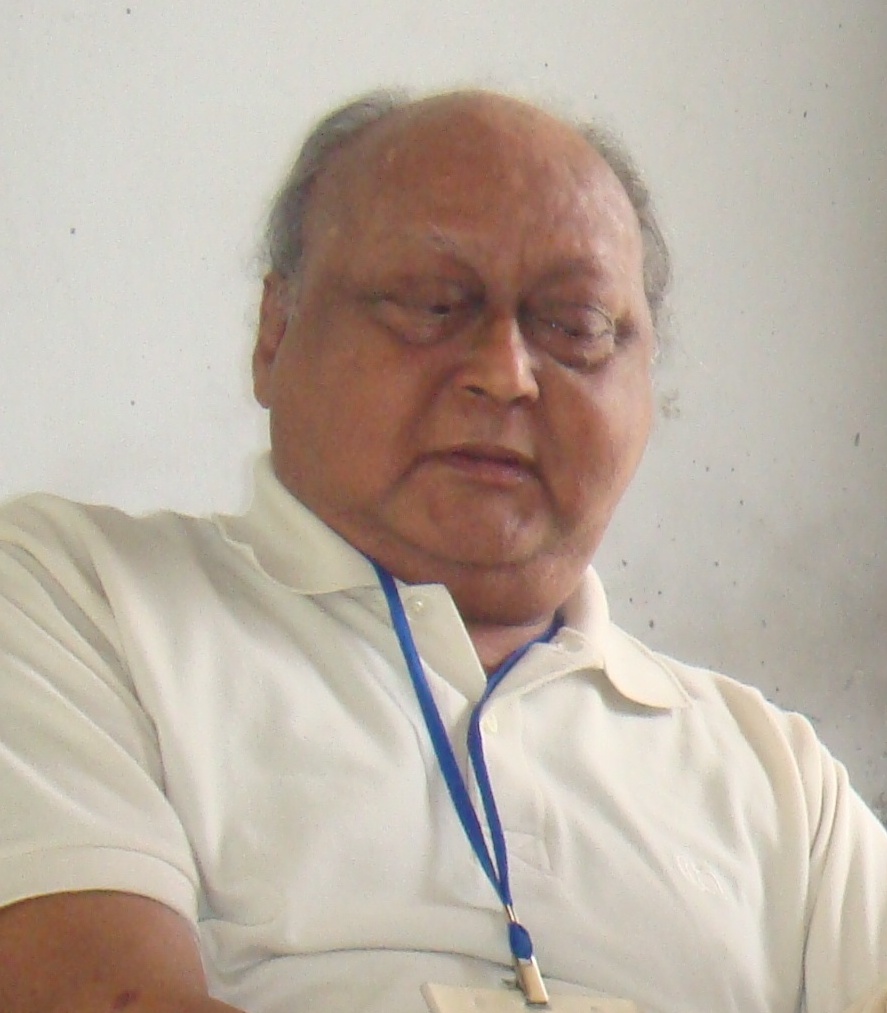
Jayanta Mahapatra (1928–2023) was one of the most respected voices in Indian English literature. Born in Cuttack, Odisha, he began his professional life as a physics teacher but later gained international recognition for his poetry and prose. He was the first Indian English poet to receive the Sahitya Akademi Award, and his work often reflects memory, identity, cultural experience, and human introspection.
His writing is known for:
Emotional depth
Cultural sensitivity
Psychological realism
Simplicity combined with philosophical meaning
Mahapatra’s stories frequently explore ordinary people in traditional settings, revealing how beliefs, traditions, and human reasoning interact. The Trunk of Ganesha is a perfect example of his ability to transform a simple incident into a reflection on human nature.
Introduction to the Story:
The story centers on Govinda, a skilled artisan who creates clay idols of Hindu deities. Idol-making is not merely a profession for him — it is a family tradition passed down through generations. Govinda takes great pride in his work, and his craftsmanship is widely respected in his village.
.jpg)
Govinda lives with his wife Sulochana and three sons. Among them, his youngest son Ranju shows genuine interest in learning the craft, symbolizing continuity of tradition. The narrative begins peacefully but soon introduces a puzzling problem: every time Govinda completes an idol of Lord Ganesha, the trunk mysteriously breaks during the night.
This simple event becomes the foundation for a deeper exploration of belief, fear, and rational thinking.
Detailed Plot Explanation:
1. Govinda’s Life and Craft
Govinda is portrayed as a patient and dedicated craftsman. He works carefully with clay, shaping divine forms with devotion and artistic precision. His skill is not only technical but spiritual — he believes that creating idols is a sacred act. The environment of his workshop reflects tradition, discipline, and reverence.
His youngest son Ranju often observes him, asking questions and learning techniques. This relationship highlights the generational transmission of knowledge, emphasizing how culture survives through practice and teaching.
2. The Mysterious Problem
While making a clay idol of Lord Ganesha, Govinda notices something strange: each morning the trunk of the idol is broken. He repairs it carefully, but the next morning the same thing happens again. The problem repeats multiple times, creating anxiety and confusion.
Govinda considers several explanations:
Perhaps the clay mixture is weak.
Perhaps humidity affects the structure.
Perhaps the idol is imbalanced.
Perhaps divine displeasure is involved.
As the problem continues, his reasoning gradually shifts from practical to emotional and spiritual. He begins to suspect that the gods may be unhappy with him — a reflection of how fear influences belief.
3. Psychological Conflict
Govinda’s internal struggle becomes the central focus of the story. He wonders whether he has committed some mistake in his devotion. He reflects on whether artistic innovation might have offended tradition. He questions his own integrity as a craftsman.
This phase of the story shows how uncertainty can produce self-doubt. Instead of immediately investigating physical causes, Govinda interprets the event through cultural belief. This reveals the power of tradition in shaping perception.
4. Decision to Investigate
Eventually, Govinda decides to observe the workshop at night. He and Ranju hide quietly after finishing the idol. This moment represents a turning point — the shift from assumption to investigation.
Ranju falls asleep, but Govinda continues watching carefully. The silence of the night heightens suspense. The reader expects something supernatural, reflecting Govinda’s own anticipation.
5. The Truth Revealed
Late at night, Govinda notices movement near the window. A cat enters the workshop, climbs onto the idol, and jumps on the trunk — causing it to break. The mystery is solved instantly.
There is no divine intervention, no curse, no spiritual punishment. The cause is entirely natural and simple. The tension collapses into clarity.
6. Resolution
The discovery brings relief and subtle humor. Govinda realizes that his fears were unnecessary. The story ends quietly, emphasizing insight rather than dramatic action.
The narrative teaches that human imagination often creates complexity where none exists.
Major Themes in the Story
1. Tradition vs Rational Thinking
The story contrasts inherited belief with logical observation. Govinda initially interprets events through faith, but the truth emerges through investigation. The message is not anti-tradition but pro-understanding.
2. Human Tendency Toward Superstition
When faced with unexplained events, humans often assume supernatural causes. The story demonstrates how fear and uncertainty shape interpretation more strongly than evidence.
3. Craftsmanship and Devotion
Govinda’s work reflects dedication and identity. Idol-making is not merely economic activity — it is cultural continuity. The story respects this tradition while encouraging rational awareness.
4. Perception vs Reality
What appears mysterious may have a simple explanation. The difference between assumption and observation forms the philosophical core of the narrative.
5. Irony
Lord Ganesha is traditionally known as the remover of obstacles. Yet the obstacle in the story exists only because of misunderstanding. This irony deepens the story’s meaning.
Character Analysis:
Govinda
Dedicated artisan
Respectful of tradition
Emotionally sensitive
Ultimately rational
He represents the ordinary human mind balancing belief and reason.
Ranju
Curious observer
Symbol of continuity
Represents openness to learning
The Cat
Symbol of ordinary reality
Represents unexpected simple causes
Literary Techniques Used
Realism
The story uses everyday setting and believable characters.
Suspense
The repeated breaking of the trunk builds curiosity.
Symbolism
The broken trunk symbolizes disruption of certainty.
Irony
The expected supernatural cause is replaced by a mundane explanation.
Important Points for Study
The story explores psychological reaction to unexplained events.
It reflects rural cultural life and artisan tradition.
It emphasizes observation over assumption.
It presents a universal message through local context.
It uses simplicity to communicate philosophical meaning.
Moral and Message
Conclusion:
The Trunk of Ganesha is a subtle and meaningful narrative that transforms a simple incident into a reflection on human psychology and cultural belief. Through Govinda’s experience, the story illustrates how easily humans interpret uncertainty through fear and tradition. Yet it also shows the power of inquiry and patience.
Jayanta Mahapatra presents a world where devotion and logic coexist. The story does not reject belief but encourages awareness. By resolving mystery through ordinary explanation, it reminds readers that truth often lies in careful observation rather than assumption.
The story remains relevant because it addresses a universal human tendency: when faced with confusion, we often search for complex explanations instead of examining simple reality. Through gentle irony and cultural depth, Mahapatra offers insight into how humans understand the world.
References:
Pithadiya, A. (2024, April 13). The Trunk of Ganesha by Jayant Mahapatra. The Colorful Diary | Teacher Blog. https://pnrshahmahilascollege.blogspot.com/2024/04/the-trunk-of-ganesha-by-jayant-mahapatra.html
Rayjada, D. (2019, March 7). The Trunk of Ganesha by Jayanta Mahapatra. https://dharabarayjada.blogspot.com/2019/03/the-trunk-of-ganesha-by-jayanta.html
Siddhi & Literature. (2020c, June 27). THE TRUNK OF GANESHA QUESTIONS ANSWERS CLASS 9TH IN ODIA [Video]. YouTube. https://www.youtube.com/watch?v=NhUUu8mJJsY

.png)


No comments:
Post a Comment