This blog is about the scientific study of speech sounds, known as phonetics. It explores how human beings produce, transmit, and perceive spoken language through physical and cognitive processes. The discussion examines the organs of speech, classification of sounds, and the role of phonetics in communication and language learning.
Introduction to Phonetics:
Phonetics is the scientific study of speech sounds — how they are produced, transmitted, and perceived. It sits at the intersection of linguistics, physics, anatomy, and psychology. Whenever you speak, a highly coordinated system involving the lungs, vocal cords, tongue, lips, and brain creates patterns of sound waves that carry meaning. Phonetics examines these patterns in a precise and measurable way.
Unlike grammar or vocabulary, which focus on meaning and structure, phonetics focuses purely on sound itself. It answers questions such as:
How do humans physically produce speech sounds?
Why do some sounds feel similar while others differ sharply?
How can we represent pronunciation accurately across languages?
What makes accents different?
Understanding phonetics is essential for language learning, speech therapy, linguistics research, communication technology, and even forensic voice analysis.
This detailed explanation explores phonetics from its foundations to its practical applications, guiding you step by step from basic concepts to advanced understanding.
The Human Speech Mechanism:

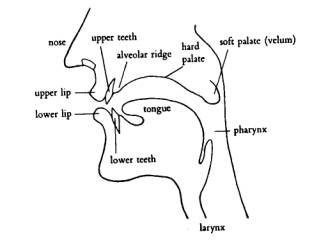

Speech begins with airflow. Air from the lungs passes through the vocal tract, where various organs shape it into recognizable sounds. These organs are called articulators.
Main Organs of Speech
Speech is therefore not random noise — it is carefully controlled airflow shaped by the body.
Branches of Phonetics
Phonetics is divided into three major branches, each studying sound from a different perspective.
1. Articulatory Phonetics
This branch studies how sounds are physically produced by the human body.
It focuses on:
Position of tongue
Movement of lips
Vocal cord vibration
Airflow control
2. Acoustic Phonetics
This branch studies sound waves — the physical properties of speech sounds.
It examines:
Frequency (pitch)
Amplitude (loudness)
Duration
Wave patterns
Acoustic phonetics uses technology like spectrograms to visualize sound.
3. Auditory Phonetics
This branch studies how the human ear and brain perceive sound.
It investigates:
How we distinguish sounds
How accents are recognized
How speech is processed in the brain
Together, these three branches provide a complete understanding of speech.
The International Phonetic Alphabet (IPA)
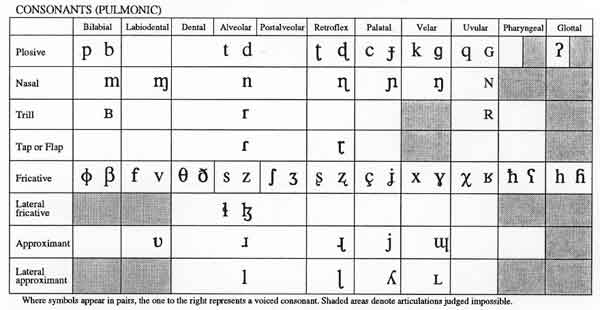
Languages often use the same letter to represent different sounds. To solve this problem, linguists developed the International Phonetic Alphabet (IPA) — a universal system where each symbol represents exactly one sound.
Why IPA is Important
Shows exact pronunciation
Works for all languages
Eliminates spelling confusion
Helps in language learning
Example:
| Word | Normal Spelling | IPA |
|---|---|---|
| Cat | cat | /kæt/ |
| Think | think | /θɪŋk/ |
| Measure | measure | /ˈmɛʒər/ |
IPA allows precise recording of speech sounds.
Classification of Speech Sounds:
Speech sounds are broadly divided into vowels and consonants.
Vowel Sounds
Vowels are produced without obstruction of airflow. The sound quality depends mainly on tongue position and lip shape.
Vowel Classification Criteria
1. Tongue Height
High: /i/ as in “see”
Mid: /e/ as in “bed”
Low: /a/ as in “father”
2. Tongue Position
Front vowels: /i/, /e/
Back vowels: /u/, /o/
Central vowels: /ə/
3. Lip Shape
Rounded: /u/, /o/
Unrounded: /i/, /e/
Examples
/i/ → “machine”
/æ/ → “cat”
/u/ → “food”
Vowels carry the sonority of speech — they form the core of syllables.
Consonant Sounds:
Consonants are produced when airflow is partially or completely blocked.
Consonant Classification
Bilabial → lips (/p/, /b/, /m/)
Dental → tongue and teeth (/θ/)
Alveolar → tongue and ridge (/t/, /d/, /s/)
Velar → back of tongue (/k/, /g/)
Stop sounds → /p/, /t/, /k/
Fricatives → /f/, /s/, /v/
Nasals → /m/, /n/
Approximants → /w/, /l/
3. Voicing
Voiced → /b/, /d/, /g/
Voiceless → /p/, /t/, /k/
Consonants provide structure and clarity in speech.
Acoustic Properties of Speech
Speech sounds are physical vibrations traveling through air.
Key Acoustic Features
Example:
The vowel /i/ has high frequency resonance.
The vowel /u/ has lower resonance.
Acoustic analysis helps in speech recognition technology.
Perception of Speech
Humans do not just hear sound — they interpret it. The brain categorizes similar sounds into meaningful units.
Features of Speech Perception
Categorical perception (we group similar sounds)
Context influence (sound depends on surrounding sounds)
Accent recognition
Language-specific sound patterns
For example, English speakers distinguish /r/ and /l/, but some languages treat them similarly.
Phonetics vs Phonology
These two fields are closely related but different.
| Phonetics | Phonology |
|---|---|
| Studies physical sound | Studies sound patterns |
| Focus on production | Focus on language system |
| Universal approach | Language-specific |
Applications of Phonetics
Phonetics has wide practical importance.
1. Language Learning
Helps learners pronounce words correctly.
2. Speech Therapy
Used to correct pronunciation disorders.
3. Forensic Science
Voice identification in investigations.
4. Technology
Used in:
Voice assistants
Speech recognition
Text-to-speech systems
5. Accent Studies
Explains regional pronunciation differences.
Practical Examples of Phonetic Analysis
Example 1: Voiced vs Voiceless
/b/ → vocal cords vibrate
/p/ → no vibration
Example 2: Minimal Pairs
Words differing by one sound:
Bat /bæt/
Pat /pæt/
This difference changes meaning.
Example 3: Nasal Sounds
Air passes through nose:
/m/ in “man”
/n/ in “no”
Importance of Phonetics in Communication
Phonetics ensures clarity and understanding. Mispronunciation can change meaning completely.
Example:
“Ship” vs “Sheep”
“Live” vs “Leave”
Accurate sound production supports effective communication across languages and cultures.
Key Concepts Summary
Speech is produced through controlled airflow
Phonetics studies sound scientifically
Three branches: articulatory, acoustic, auditory
IPA provides universal sound symbols
Sounds classified as vowels and consonants
Phonetics supports technology and language learning
Conclusion:
Phonetics reveals the remarkable complexity behind everyday speech. What seems natural and effortless is actually a sophisticated process involving anatomy, physics, and cognition. By studying how sounds are produced, transmitted, and perceived, phonetics helps us understand not only language but human communication itself.
It bridges science and language, explaining why accents exist, how pronunciation varies, and how speech carries meaning beyond words. From classrooms to laboratories, from language learning to advanced technology, phonetics plays a foundational role in modern communication.
Ultimately, phonetics teaches us that speech is not merely sound — it is structured, measurable, and deeply human. Understanding phonetics enriches our awareness of language and strengthens our ability to connect with others through voice.
References :
Gbadegesin, M. O., Department of English and Literary Studies, & Lead City University, Ibadan. (n.d.). Introduction to phonetics and phonology.
House, L. I. & State University of New York. (1998). INTRODUCTORY PHONETICS AND PHONOLOGY. Lawrence Erlbaum Associates.
Hayes, Bruce. “Introductory Phonology.” file:///C:/Users/Admin/Downloads/hay09phonologytextbook-ch1and2.pdf. Accessed 2007.

.png)


No comments:
Post a Comment