This blog based on the Chekhov's famous play “The Proposal”.

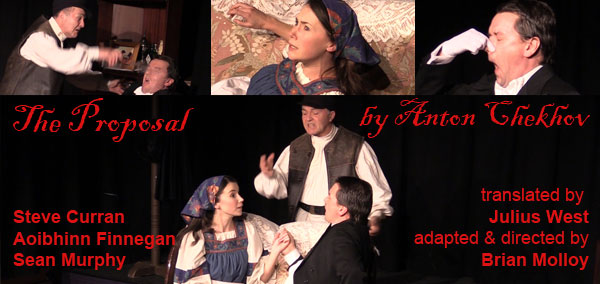
Introduction:
The Proposal is a well-known comic one-act play written by the Russian dramatist Anton Chekhov. The play is widely regarded as one of Chekhov’s most entertaining farcical comedies and is frequently performed in theatres and studied in literature courses. Through humorous exaggeration and lively dialogue, Chekhov exposes the absurdities of social conventions, human pride, and the practical nature of marriage in nineteenth-century Russia.
Although the play appears simple on the surface, it reflects deeper social realities. Marriage in many societies of the nineteenth century was not always based on romantic love; instead, it often involved practical considerations such as property, wealth, and social status. Chekhov cleverly presents this idea through a comic situation in which a man arrives to propose marriage but ends up arguing constantly with the woman he wishes to marry. The play therefore becomes a satire on human behavior, social expectations, and the trivial conflicts that often dominate relationships.
1. Historical and Literary Background
Anton Chekhov was one of the most important writers of Russian literature and modern drama. During the late nineteenth century, Russian society was undergoing significant social changes. Traditional aristocratic structures were weakening, while new middle-class values were emerging. Landownership and family reputation remained important factors in social life.
Chekhov’s literary works often focused on the ordinary lives of people, highlighting their weaknesses, frustrations, and contradictions. Unlike earlier dramatic traditions that emphasized heroic characters and grand conflicts, Chekhov’s plays often portray everyday situations and realistic human behavior.
“The Proposal” was written during a period when Chekhov was experimenting with comic drama. The play belongs to the genre of farce, which uses exaggerated situations, fast-paced dialogue, and absurd arguments to create humor. Even though the play is humorous, it also reflects Chekhov’s keen understanding of human psychology and social behavior.
2. Plot Summary
The entire action of the play takes place in the drawing room of Stepan Stepanovich Chubukov, a middle-aged landowner. The play begins when Ivan Vassilevitch Lomov, a neighbor of Chubukov, arrives dressed in formal clothes. Chubukov initially assumes that Lomov has come to borrow money again, but Lomov explains that he has come with a serious purpose.
Lomov reveals that he has decided to get married. He explains that he is already thirty-five years old and suffers from several health problems, including heart palpitations and nervous anxiety. According to him, marriage is necessary for a stable and peaceful life. He believes that Natalya Stepanovna, Chubukov’s daughter, is a suitable match because she is a good housekeeper and comes from a respectable family.
Chubukov is delighted to hear this news. For a long time he has hoped that Lomov would marry his daughter, because such a marriage would strengthen the relationship between the two neighboring families. Without telling Natalya about Lomov’s intention, he goes inside to call her.
When Natalya enters the room, she begins talking casually with Lomov about agricultural matters. During the conversation, Lomov mentions that the Oxen Meadows belong to his family. This statement immediately provokes a heated argument. Natalya strongly insists that the meadows belong to her family and that they have always been part of her property.
The disagreement quickly becomes intense. Both characters begin shouting and accusing each other of dishonesty. Instead of discussing marriage, they argue about documents, family history, and property boundaries. Their voices become so loud that Chubukov returns to the room.
Rather than calming them down, Chubukov supports his daughter and begins insulting Lomov. The argument becomes even more chaotic, with all three characters shouting at each other. Lomov becomes extremely upset and leaves the house angrily.
After Lomov leaves, Chubukov reveals to Natalya that Lomov had actually come to propose marriage. Natalya is shocked and immediately regrets her behavior. She becomes anxious and begs her father to bring Lomov back because she does not want to lose the opportunity to marry him.
Chubukov rushes out and persuades Lomov to return. When Lomov comes back, Natalya tries to behave politely and calm the situation. However, the conversation soon shifts to another topic: hunting dogs. Lomov proudly claims that his dog Guess is superior to Natalya’s dog Squeezer.
This statement leads to another intense argument. Natalya insists that her dog is better, while Lomov tries to prove the superiority of his own dog. The argument becomes so heated that Lomov begins to suffer from severe heart palpitations and collapses.
Chubukov and Natalya panic, believing that Lomov has died. In desperation, Chubukov places Lomov’s hand in Natalya’s hand and declares them engaged. At that moment, Lomov regains consciousness. However, instead of celebrating their engagement, the couple immediately resumes arguing about the dogs. The play ends humorously with the suggestion that their married life will likely be filled with similar quarrels.
3. Character Analysis
Ivan Vassilevitch Lomov
Lomov is a nervous and overly sensitive landowner. He constantly complains about his poor health and fears that he may die at any moment. His character represents a typical hypochondriac who exaggerates minor physical problems.
Although he has come to propose marriage, his personality is argumentative and stubborn. He becomes extremely angry whenever someone questions his claims about property or personal matters. His desire to marry Natalya is not based on romantic love but on practical considerations such as stability and economic security.
Natalya Stepanovna
Natalya is Chubukov’s twenty-five-year-old daughter. She is energetic, emotional, and extremely stubborn. Like Lomov, she is quick to argue and defend her family’s honor.
Despite her aggressive behavior, she clearly wants to marry Lomov. When she learns that Lomov had come to propose marriage, she becomes desperate and insists that her father bring him back immediately. Her character reflects the social pressure on women to marry during that period.
Stepan Stepanovich Chubukov
Chubukov is Natalya’s father and a middle-aged landowner. He appears friendly at first, but his temperament quickly changes when arguments arise. He strongly supports his daughter during the disputes and openly insults Lomov.
However, Chubukov also understands the practical advantages of the proposed marriage. Therefore, when Lomov collapses, he quickly tries to ensure that the engagement takes place.
4. Major Themes
Marriage as a Practical Arrangement
One of the central themes of the play is the idea that marriage is often based on practical considerations rather than romantic love. Lomov openly states that he wants to marry because he needs a stable and orderly life. His decision is motivated more by convenience than by emotional attachment.
Human Pride and Ego
The characters in the play are extremely proud of their property and family reputation. Even a small disagreement quickly turns into a heated argument because each character wants to prove that they are right.
Absurdity of Social Behavior
Chekhov uses humor to reveal how ridiculous human behavior can be. A simple marriage proposal becomes a chaotic series of arguments, showing how easily people lose control over trivial matters.
Conflict and Miscommunication
Another important theme is the inability of the characters to communicate calmly. Instead of discussing their differences rationally, they immediately resort to shouting and insults.
5. Dramatic Techniques
Chekhov uses several dramatic techniques to create humor and maintain the audience’s interest.
Farce
The exaggerated arguments and dramatic reactions create a farcical atmosphere.
Irony
The audience knows that Lomov came to propose marriage, but Natalya initially does not. This creates dramatic irony.
Rapid Dialogue
The quick exchange of dialogue increases the pace of the play and intensifies the comic effect.
Exaggeration
The characters’ emotional reactions and health complaints are exaggerated to create humor.
6. Symbolism
The Oxen Meadows represent human greed and obsession with property ownership. The argument about dogs symbolizes the petty competition that often exists between individuals.
7. Chekhov’s Contribution to Drama
Anton Chekhov is considered one of the founders of modern drama. His plays focus on realistic characters and everyday situations. Even in a short comic play like “The Proposal,” he reveals deeper truths about human nature.
Chekhov’s ability to combine humor with psychological insight makes his works unique and timeless.
8. Conclusion
“The Proposal” is a brilliant comic play that demonstrates Anton Chekhov’s mastery of dramatic humor. Through a simple situation—a man visiting his neighbor to propose marriage—Chekhov creates a lively and entertaining portrayal of human stubbornness, pride, and absurdity.
The play shows that people often care more about trivial arguments than about meaningful relationships. Despite the constant quarrels, Lomov and Natalya still agree to marry, suggesting that human relationships are often complicated and imperfect.
Even though the play was written more than a century ago, its themes remain relevant today. The humorous conflicts and exaggerated personalities continue to entertain audiences while also encouraging them to reflect on the nature of human behavior.
References:
Chekhov, Anton, and Paul Caywood. The Marriage Proposal. 1997.
Chekhov, Anton. “The Proposal.” First Flight, play, 18

.png)


No comments:
Post a Comment